
Basement Waterproofing in Bradford: Solving High Groundwater in Wool-Trade Terraces
Quick answer
Why does Bradford need such thorough basement waterproofing?
Bradford sits in a basin of the Aire Valley with a naturally high water table, a legacy of the wool trade's constant pumping during the mill era, and most Victorian terraces here were built without a modern damp-proof course. That combination means cellars in Bradford almost universally need active waterproofing rather than a passive coating. We test the actual water pressure at your property during a free survey and specify cavity drainage, tanking, or a hybrid depending on what genuinely holds, not whichever is quickest to apply.
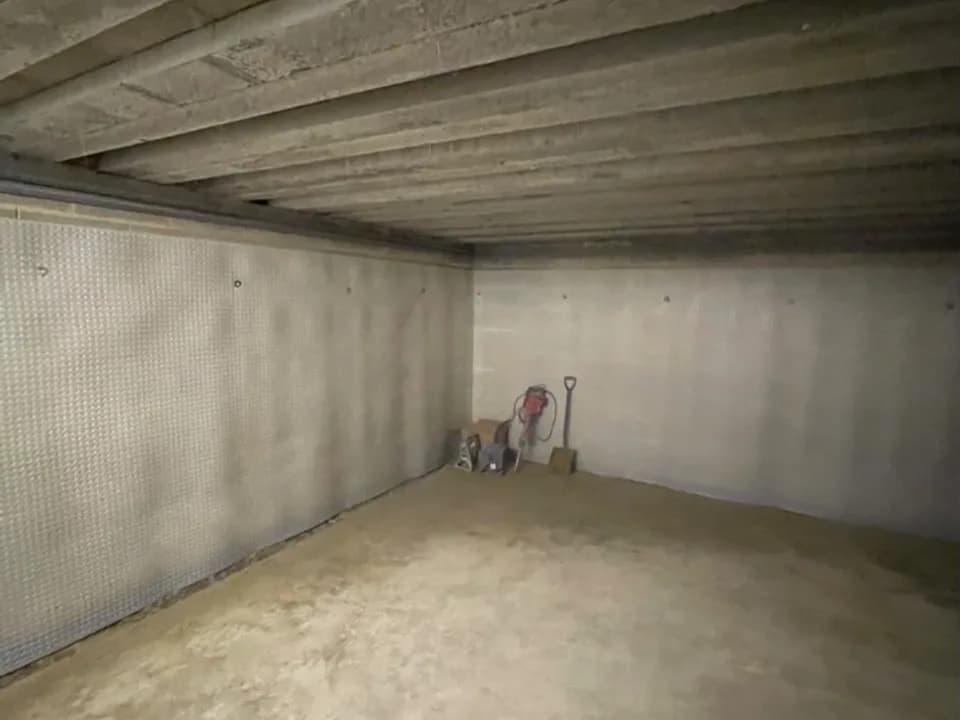
Bradford's dense Victorian terraces were built during the height of the wool trade, with cellars that once stored raw fleece and finished cloth and are today mostly forgotten, damp, and underused. RM Lee Cellar Conversions has waterproofed dozens of Bradford cellars across postcodes like BD2, BD3 and BD4, and the city's specific challenge is consistent: Bradford sits in a basin of the Aire Valley with historically high groundwater, and the mills that once pumped that water constantly are long gone, so it seeks its own level now, and cellars feel it first. Many Bradford terraces were also built without a modern damp-proof course, which means moisture wicks upward through the brick almost as a matter of course rather than an occasional problem. The good news is that Bradford's high-quality Victorian brickwork responds extremely well to cavity drainage once it is properly specified: once water ingress is actively managed rather than fought with a thin coating, the space dries out completely. Our free survey includes moisture testing across the cellar floor and walls, inspection of any existing damp-proofing, and an honest assessment of whether tanking alone will genuinely hold or whether your property needs the more robust cavity drainage approach that Bradford's water table usually calls for.
Also available
Other services we offer in Bradford
Cellar Conversions
Turn a cold, cluttered cellar into a room your family actually uses, from waterproofing to the final coat of paint.
Cellar Tanking
A cementitious tanking slurry coat, specified honestly, for cellars where it is the right fit rather than the easy sell.
Timber Treatment
Damp cellars attack timber quietly for years. We treat or replace affected joists once the underlying damp is fixed.
Questions
Bradford Basement Waterproofing FAQs
Bradford's location in the Aire Valley means a naturally high water table. The mills used to pump groundwater constantly; now that industry is gone, water seeks its own level, and cellars feel it first. Add Victorian terraces built without a modern damp-proof course, and upward moisture wicking is the norm rather than the exception.
Not always cavity drainage. Some Bradford properties on slightly raised ground, or near natural drainage channels, respond well to quality tanking alone. Others in lower-lying streets need full cavity drainage. Our survey tests actual water pressure so we specify only what your property needs, not worst-case overkill.
Tanking, a membrane-based sealing coat, costs roughly GBP 40 to GBP 80 per square metre. Cavity drainage, with a channel, sump and pump, costs GBP 80 to GBP 150 per square metre. For a 20 sqm cellar that is broadly GBP 800 to GBP 1,600 against GBP 1,600 to GBP 3,000. If tanking fails in a high water-table area, which happens more often in Bradford than elsewhere, retrofitting cavity drainage afterward is far more expensive than specifying it correctly the first time.
Hard to say without investigation, and some Bradford cellars have been damp for 50 years or more. The good news is that if the brickwork itself is sound, waterproofing now stops future damage and lets the space be used. Our survey assesses whether the structure is suitable despite a long history of dampness.
No, provided the system is properly specified and installed. Our tanking and cavity drainage systems form a complete barrier or an active management system. Once dry, a Bradford cellar stays dry as long as ventilation is maintained and the system is not later damaged.
No, waterproofing alone is internal work that does not change the footprint or external appearance of the property, so it sits outside planning control. Building regulations apply if the waterproofing is part of a wider conversion into habitable space.
Waterproofing alone is 2 to 4 weeks depending on method and cellar size. We schedule works to minimise disruption to your home above and give you a realistic timeline once the survey confirms scope.
A basic sump, including basin, pump, controls and discharge pipework, typically costs GBP 1,500 to GBP 3,000 including installation. It is a one-time expense that protects your investment for decades, with minimal ongoing running costs.
Ventilation matters, especially in Bradford's high-damp environment, to prevent condensation once the space is dry. Options include a humidistat-controlled extractor fan, passive vents, or an MVHR system for larger schemes. We design this around what the space will actually be used for.
Both, depending on age. Pre-1850 cellars are often stone or rough brick; Victorian cellars from 1850 to 1900 are typically well-built red brick, and Edwardian ones onward are usually engineering brick. We document the material at survey so we choose compatible waterproofing.
Yes. We work carefully to minimise noise and dust, especially during the intensive waterproofing and drying phases. Some clients prefer to step out during that period, but it is not necessary. We discuss logistics at the planning stage.