
Rising Damp Works Across Yorkshire and Lancashire
Quick answer
How do you fix rising damp?
We start by diagnosing the true cause, because not all damp is rising damp. Where rising damp is confirmed, we install a new chemical damp-proof course by injection to BS 6576 and follow it with salt-neutralising render and replastering. RM Lee carries out this work across Yorkshire and Lancashire.
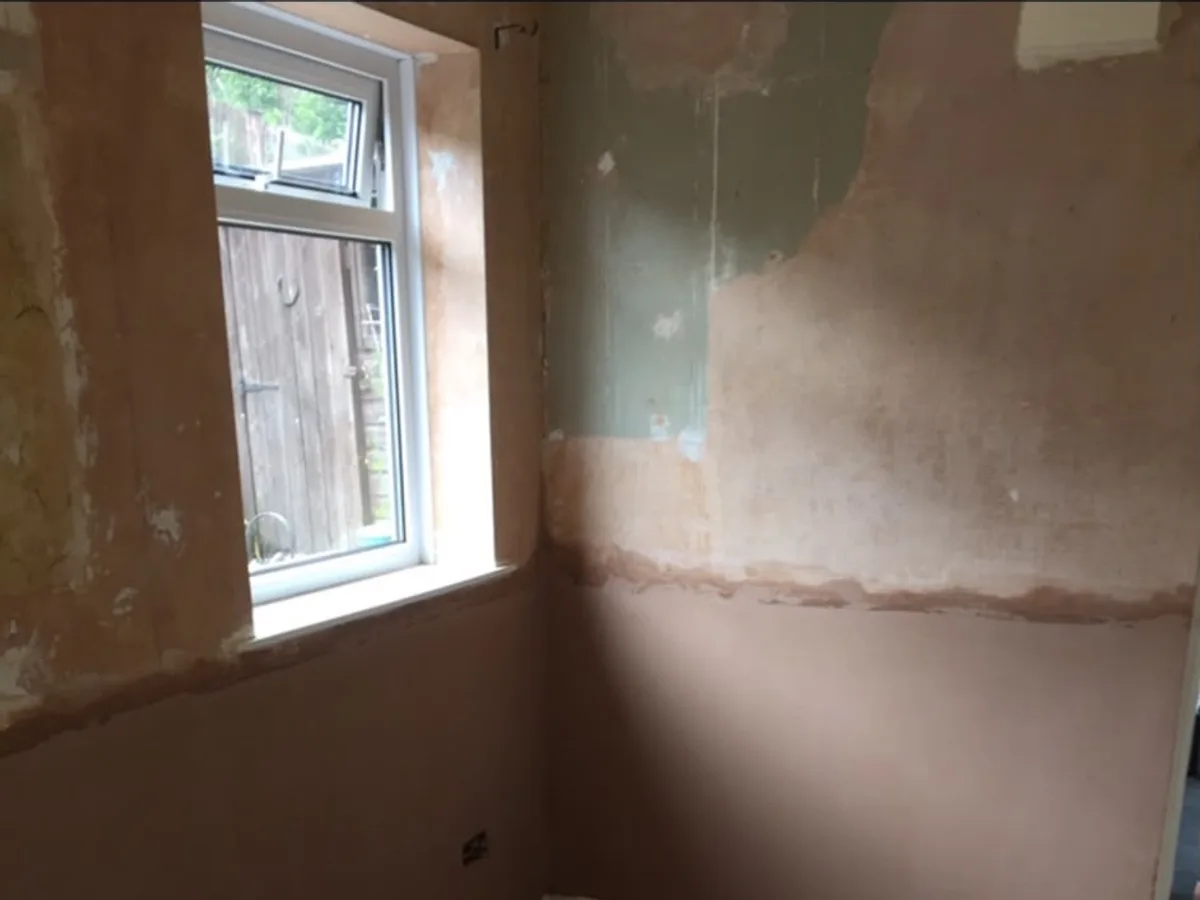
Tide marks near the skirting, blown plaster, salt staining and a musty smell all point to a wall drawing moisture up from the ground, and left alone rising damp only spreads and destroys plaster and decoration. RM Lee gets to the root of it, diagnosing whether you are actually dealing with rising damp, penetrating damp or condensation, then carrying out the correct remedial works. From damp-proof course injection to salt-neutralising render and replastering, we put the problem right properly across Yorkshire and Lancashire.
- Honest diagnosis first, so you only pay to fix the real problem
- Damp-proof course injection installed to BS 6576
- Salt-neutralising render and replastering to stop salt staining returning
- Guaranteed remedial work across Yorkshire and Lancashire
The process
How this job actually runs
01
Diagnose the cause
We inspect and test the walls to confirm whether it is genuine rising damp, penetrating damp or condensation, because the wrong treatment fixes nothing.
02
Install a new damp-proof course
Where rising damp is confirmed, we inject a chemical damp-proof course into the mortar bed to form a new water-repellent barrier in line with BS 6576.
03
Remove and replaster with salt-neutralising render
Contaminated plaster is hacked off and the wall is replastered with a salt-resistant render system so hygroscopic ground salts cannot spoil the new finish.
04
Finish and guarantee
Walls are left smooth and ready to decorate once dry, and the damp-proofing work is backed by a guarantee.
Related
Other services we cover
Questions
Rising Damp Works FAQs
We inspect the wall and take damp readings, then look at the salt pattern, the height of the damp, ground and external levels, and the condition of any existing damp-proof course. Rising damp comes from the ground and rarely rises above about a metre, so if the damp is high up or patchy it usually points to penetrating damp or condensation instead. We confirm the cause before recommending any treatment.
Rising damp is ground moisture drawn up through the wall due to a failed or missing damp-proof course, and stays low down. Penetrating damp enters from outside through failed pointing, leaking gutters, raised paths or bridged cavities and can appear at any height. Condensation forms on cold surfaces from moist air and usually shows as black mould in corners and around windows. Each needs a different fix, which is why we diagnose first.
Cost depends on the length of wall and how much replastering is needed. As a rough guide, damp-proof course injection is often priced from around 70 to 120 pounds per metre of wall including the salt-neutralising replastering, and a small survey and treatment can start from a few hundred pounds. We give a clear competitive quote once we have seen the job. We cover Yorkshire and Lancashire.
A damp-proof course is a barrier low in the wall that stops ground moisture rising through the masonry. Where the original has failed we install a new chemical one by drilling the mortar bed and injecting a water-repellent cream or fluid that spreads to form a continuous barrier. We carry this out in line with BS 6576, the standard for chemical damp-proof course installation.
Rising damp carries hygroscopic and deliquescent salts from the ground up into the plaster. Those salts keep attracting moisture from the air even after the wall is dry, so if the old plaster is left in place the tide marks and dampness return. We remove the contaminated plaster and replaster with a salt-neutralising render so the new finish stays clean and dry.
Masonry dries at roughly twenty-five millimetres per month, so a thick solid wall can take several months to reach full dryness. The new salt-resistant render can be decorated much sooner with a breathable paint, and we explain the drying period and what to use in the meantime for your specific wall.
Yes. RM Lee is based in Hebden Bridge and carries out damp diagnosis and remedial works right across Yorkshire and Lancashire. Call 07532 272727 to confirm we cover your area.
Yes. Our remedial damp works, including damp-proof course injection and salt-neutralising replastering, are guaranteed. We explain what the guarantee covers when we quote so you know exactly where you stand.
Where possible, clear furniture and belongings away from the affected walls and lift or move floor coverings near the skirting. We cover floors and remaining fittings before we start, as the work involves removing old plaster and some dust. Let us know if access or clearing is a problem and we will work around it.
Call or message RM Lee on 07532 272727 with a description of what you are seeing, such as tide marks, blown plaster or a musty smell, and your location in Yorkshire or Lancashire. We will arrange to inspect, diagnose the real cause and give you a clear quote for the right works.
Areas