
Cellar and Basement Conversions in Blackpool, an Honest Look at What the Coast Will Allow
Quick answer
What does a cellar conversion in Blackpool involve?
Blackpool sits on blown sand with a high water table, so genuine deep cellars are far less common here than in the Pennine mill towns, and some seafront properties simply do not have convertible ones. Where a firmer-ground terrace set back from the promenade does have a usable cellar, RM Lee can convert it, and we always start with a free survey that tells you honestly whether your property is a candidate before any commitment.
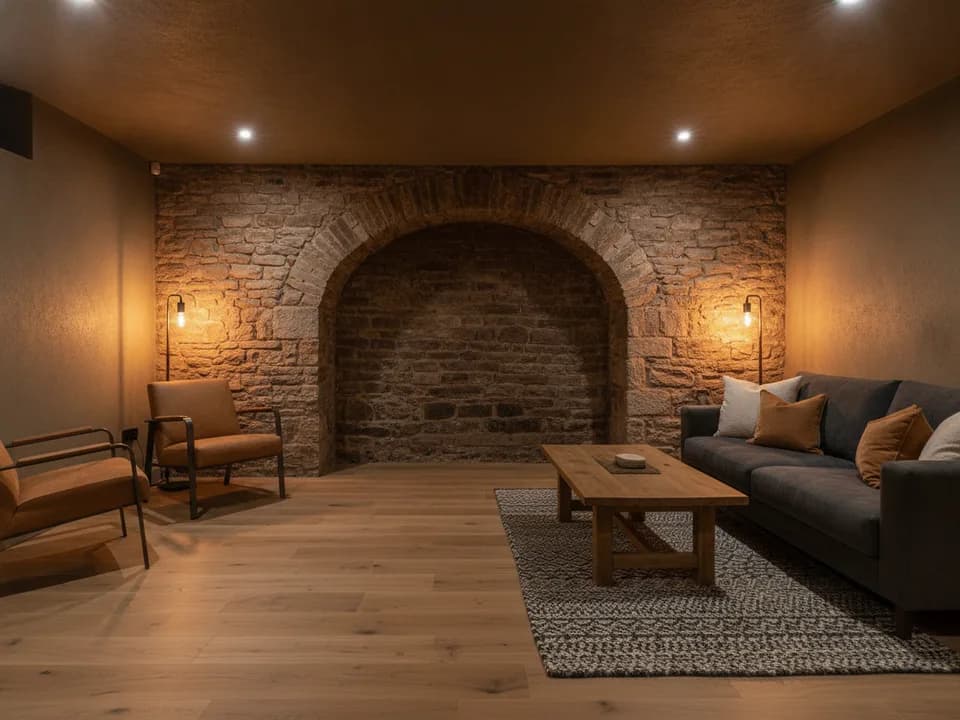
Blackpool needs a straight answer, so here it is. Much of the town is built on blown sand, peat and tidal deposits sitting over glacial till, and the water table rides high in that ground. That is very different from the solid Pennine rock and stone that most cellar conversions are dug into. It means a lot of Blackpool property, particularly the former boarding and guest houses along and near the seafront, either has no real cellar or has one that sits too close to groundwater to convert sensibly. We will tell you that on day one rather than sell you a project that fights the ground forever. The good news is that Blackpool is not all seafront sand. Set back from the promenade, on firmer glacial till, there are Victorian and Edwardian terraces with proper cellars that can be converted into real living space when they are surveyed and waterproofed correctly. The whole question in Blackpool is which category your house falls into, and that is exactly what an honest survey settles. RM Lee is a Yorkshire and Lancashire cellar and basement specialist based in Hebden Bridge. We travel to the coast for Blackpool projects, and we bring the same rule with us that we apply everywhere. We would rather turn down an unsuitable cellar than take your money for a room that never stays dry. Where the property and the ground are right, we convert it properly, with a waterproofing system designed for high groundwater, not a token coat of paint. It all begins with a free, no-obligation survey. We come and look, we test the ground and the damp, and we give you a clear, honest verdict on what is possible before you decide anything.
Also available
Other services we offer in Blackpool
Basement Waterproofing
A genuinely dry cellar starts here, cavity drainage and sump systems specified to suit Yorkshire's older housing stock.
Cellar Tanking
A cementitious tanking slurry coat, specified honestly, for cellars where it is the right fit rather than the easy sell.
Timber Treatment
Damp cellars attack timber quietly for years. We treat or replace affected joists once the underlying damp is fixed.
Questions
Blackpool Cellar Conversions FAQs
Honestly, no, and it is important to say so. Blackpool is built largely on blown sand and tidal deposits with a high water table, so many properties, especially the former seaside boarding houses near the front, have no deep cellar or one that sits too close to groundwater to convert well. The properties that do work are firmer-ground Victorian and Edwardian terraces set back from the promenade with a genuine usable cellar. Our free survey tells you which group your home is in before you spend anything.
Where a Blackpool cellar is genuinely convertible, costs usually run between 28,000 and 65,000 pounds. Blackpool projects can sit higher within that range than a dry Pennine cellar would, because the high water table often calls for a full cavity drainage system with a sump and pump rather than simple tanking. We only quote once the survey confirms the property is suitable, and then you get one fixed price that holds unless the scope changes.
For a suitable property, expect 14-18 weeks from survey to finished room. The waterproofing and drainage work that Blackpool ground demands can add time compared with a drier inland cellar, and we build that into the programme honestly rather than promising a date we cannot hit. We take one conversion at a time so yours is not left half-finished while we chase the next job.
Converting an existing cellar into a habitable room is normally a change of use and does not need full planning permission from Blackpool Council, provided the footprint does not change. Building-regulations approval is always required and covers fire escape, ventilation, damp, ceiling height and structure. Blackpool also carries residual coastal flood risk in places even behind the sea defences, so waterproofing and, where relevant, flood resilience get real attention. We handle the applications and the council liaison for you.
This is the whole game in Blackpool. In sand and tidal deposits the water table can be high and pressurised, so we very rarely rely on tanking alone here. Instead we design a cavity drainage membrane system that lines the walls and floor, collects any water that pushes through, and channels it to a sump where a pump lifts it away. That manages water pressure rather than trying to hold it back, which is the correct approach for this ground and the one that keeps the room reliably dry.
Where a set-back Victorian or Edwardian terrace has a genuine cellar, headroom is often workable. The catch in Blackpool is that lowering the floor to gain height means digging closer to a high water table, which is not always advisable. So we assess headroom and groundwater together, not separately. If the numbers do not stack up we will tell you plainly rather than dig you into a damp problem.
Yes, on a suitable property. As with any cellar, waste has to be lifted up to the main drain using a sealed pumped upstand unit, since the room sits below the sewer. In Blackpool we integrate that with the wider drainage and pump strategy that the high water table already requires, so the systems work together. It lets you add a shower room or WC where the layout suits, and it stays fully sealed and quiet.
On the right property it can, particularly given how many Blackpool houses are flats or in multiple occupation where extra self-contained space is valuable. An added bedroom or letting room in a firmer-ground terrace can lift both value and rental income. We are careful not to oversell this though. If your property is not a genuine candidate, no conversion will add value, and we will say so rather than talk you into it.
The structural side is similar to any Victorian cellar, sound load-bearing walls made good, and underpinning only where height is gained and the ground allows. The difference in Blackpool is the waterproofing weighting. A proper design here leads with drained protection, a sump and a pump, sized for high groundwater, backed by a maintenance-friendly layout so the system stays serviceable. Every element is designed and signed off under building regulations.
Ring RM Lee on 07532 272727 and we will arrange a free, no-obligation survey. We come to your Blackpool property, inspect the cellar if there is one, test the ground and the damp, and give you a straight answer on whether a conversion makes sense. If it does, you get a fixed-price quote and a realistic timeline. If it does not, you get an honest no and you have lost nothing but an hour.
Because we tell you the truth about the coast. Blackpool ground is challenging, and plenty of properties are simply not suited to a basement conversion. We travel from Hebden Bridge, survey honestly, and only take on the jobs we can make reliably dry, then we do the waterproofing to the standard the high water table actually needs. The whole job is handled in-house, from structure and drainage to the final finish, by one accountable team that would rather walk away than leave you with a damp room.