
Cellar Tanking Services Across Yorkshire and Lancashire
Quick answer
What is tanking, and is it right for my cellar?
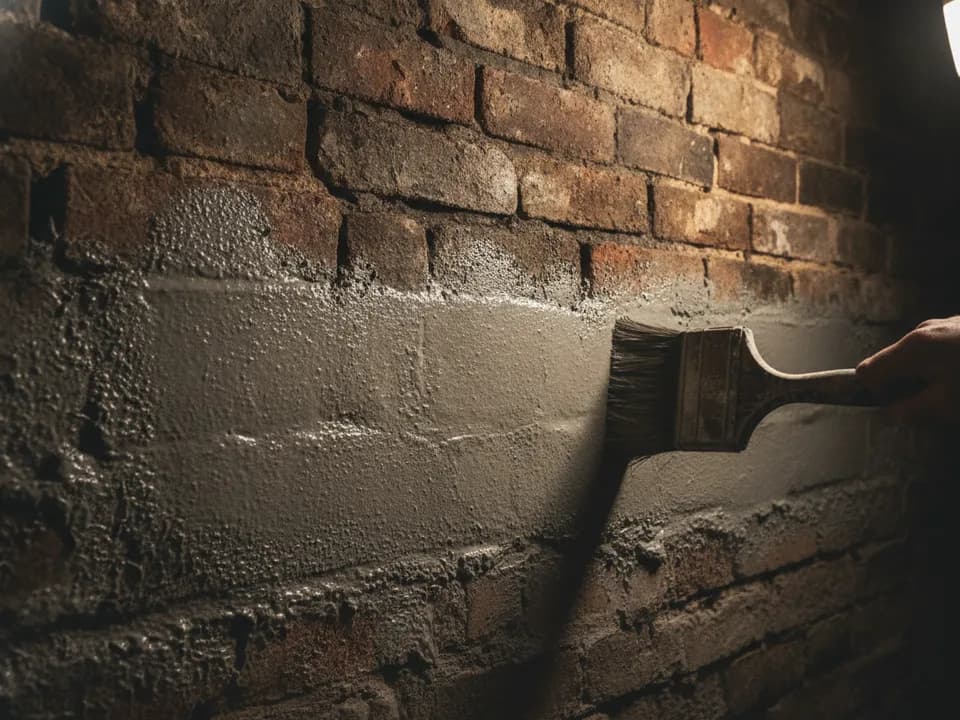
Tanking is a cementitious slurry coat applied directly to the internal walls and floor of a cellar to physically block water from getting through. It works well on cellars with lower water pressure, but on many Victorian Yorkshire properties with a high water table we will recommend cavity drainage instead, or tanking combined with a drainage channel, because tanking alone can fail under sustained pressure. We tell you which your property actually needs at survey stage, not which is easiest to sell.
Tanking has a reputation problem in this trade, plenty of firms slap a slurry coat on any cellar regardless of whether it is the right fix, and it fails within a couple of winters. RM Lee Cellar Conversions only specifies tanking where the survey shows it will actually hold, on the many Yorkshire cellars with moderate water ingress rather than a genuinely high water table, and we are equally happy to tell you when cavity drainage is the safer choice instead.
- A proven fix for moderate water ingress at a lower cost than full cavity drainage
- Can be combined with a drainage channel for extra protection
- Suitable finish for storage-only cellars as well as pre-conversion
- Honest specification, only recommended where the survey supports it
The process
How this job actually runs
01
Water Ingress Assessment
We check where and how water is entering before recommending tanking over cavity drainage or a combined approach.
02
Surface Preparation
Walls and floor are stripped back to sound masonry, loose material removed, so the slurry actually bonds.
03
Slurry Application
Multiple coats of cementitious tanking slurry applied by hand to walls and floor, forming a continuous waterproof barrier.
04
Curing and Sign-Off
Proper curing time before any finishing work goes on top, plus documentation of the system used.
Related
Other services we cover
Questions
Cellar Tanking FAQs
Cementitious tanking slurry needs proper curing time between coats and before any finishing work goes over it. We build that time into the schedule rather than rushing it, since curing too fast is one of the most common reasons tanking fails prematurely.
Usually because it was applied to a cellar with more water pressure than tanking alone can handle, or because the surface preparation was rushed. We only specify tanking where a proper survey shows it will hold, and we prepare the surface thoroughly rather than slurrying straight over loose or damp masonry.
Yes, this is a common approach on cellars with moderate water ingress, where tanking handles the wall surface and a perimeter drainage channel manages any residual water at floor level, giving extra protection without the full cost of a cavity drainage membrane throughout.
Not usually on its own. Where the water table is genuinely high, we typically recommend cavity drainage instead, because tanking works by physically blocking water rather than managing its pressure, and sustained pressure can eventually force a tanked surface to fail.
It depends on the wall condition and the product specified, but multiple coats are standard practice to build a continuous, reliable barrier rather than relying on a single thin application.
Yes, with correct surface preparation tanking slurry bonds to both, though older stone walls with uneven or crumbling mortar joints sometimes need more preparation work before the slurry is applied.
Only once the tanking has fully cured. Plastering over tanking that has not cured properly is one of the more common causes of finish failure, so we build proper curing time into the programme before any finishing trades start.
Generally yes, but the right choice depends on your water table, not the price alone. We will always tell you if cavity drainage is the safer long-term option even where it costs more, rather than steering you toward whichever is easiest to sell.
Not always, tanking alone can be sufficient where water pressure is genuinely low. Where there is any doubt, we may recommend a small sump as a backup, particularly on cellars close to a river or canal.
Signs include damp patches reappearing on the wall surface, flaking or blistering render, or a musty smell returning after a period of being dry. We can survey existing tanking and tell you honestly whether it can be repaired or needs replacing with a different system.
Areas