
Cellar Conversions in Bradford: Unlocking Space in Historic Wool Trade Terraces
Quick answer
What does a cellar conversion in Bradford involve?
Bradford cellar conversions cost between GBP 18,000 and GBP 55,000 depending on dampness severity and required waterproofing. Many Bradford terraces sit in areas with historically high groundwater, inherited from the wool-trade mills, so waterproofing is often the biggest line item.
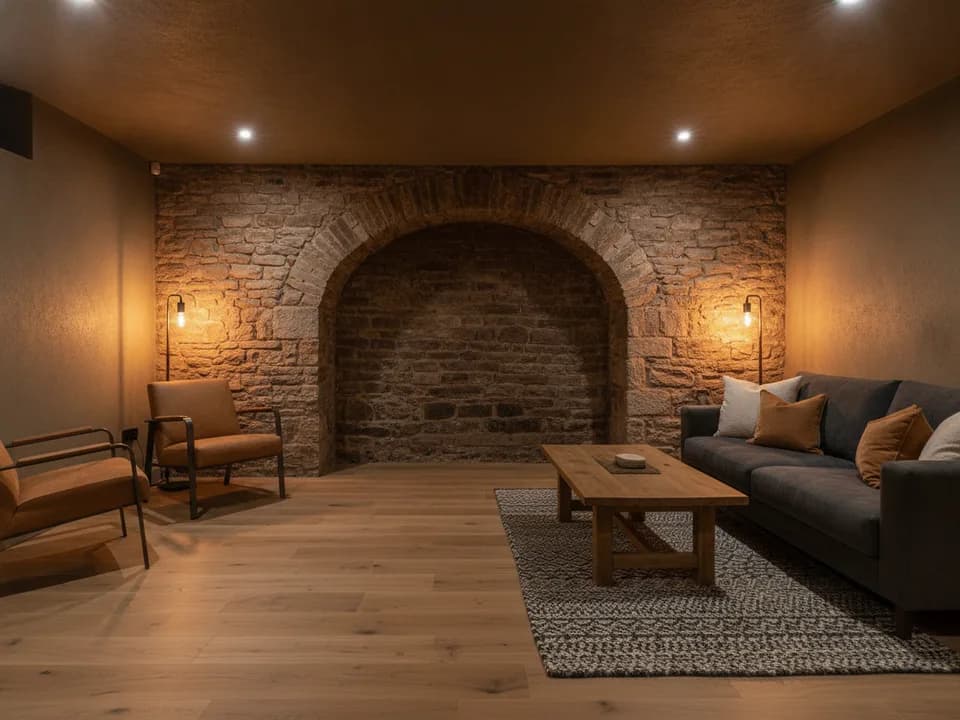
Bradford's dense Victorian terraces were built during the height of the wool trade, with cellars that once stored raw fleece and finished cloth. Today, those same cellars are often forgotten, damp, and underused. RM Lee Cellar Conversions has transformed dozens of Bradford properties across postcodes like BD2, BD3, and BD4, converting coal cellars and old storage spaces into modern bedrooms, offices, playrooms, and studios. Bradford's specific challenge is dampness: the city sits in a basin of the Aire Valley with historically high groundwater, and many terraces were built without modern damp-proof courses. This means cellars here almost universally need active waterproofing, not just crossing fingers. The good news is that Bradford's high-quality Victorian brickwork responds extremely well to cavity drainage systems: once water ingress is stopped, the space dries out completely and finishes beautifully. Bradford's property market has seen genuine recovery, especially in inner-city terraces, and adding a bedroom or office space via cellar conversion can justify a real uplift in value. Our free survey includes moisture testing across the cellar floor and walls, inspection of any existing damp-proofing, and assessment of the local water table and seasonal fluctuations. We then specify the right waterproofing approach, whether that's basic tanking, full cavity drainage with sump and pump, or a hybrid system that suits both budget and long-term durability.
Also available
Other services we offer in Bradford
Basement Waterproofing
A genuinely dry cellar starts here, cavity drainage and sump systems specified to suit Yorkshire's older housing stock.
Cellar Tanking
A cementitious tanking slurry coat, specified honestly, for cellars where it is the right fit rather than the easy sell.
Timber Treatment
Damp cellars attack timber quietly for years. We treat or replace affected joists once the underlying damp is fixed.
Questions
Bradford Cellar Conversions FAQs
Bradford's location in the Aire Valley means a naturally high water table. Add to that Victorian terraces built without modern DPC, and you have a recipe for upward moisture wicking. The mills used to pump groundwater constantly; now that industry is gone, water seeks its level, and cellars feel it first. Proper waterproofing stops this completely.
Not always. Some Bradford properties, especially those on slightly raised ground or near natural drainage channels, respond well to quality tanking alone. Others, particularly in lower-lying streets, need full cavity drainage. Our survey tests the actual water pressure so we specify only what's needed, not worst-case overkill.
Hard to say without investigation. Some Victorian Bradford cellars have been damp for 50+ years. The good news: if the brickwork itself is sound, waterproofing now stops future damage and allows the space to be used. Our survey assesses whether the structure is suitable for conversion despite decades of dampness.
No, if the waterproofing is properly specified and installed. Our systems (whether tanking or cavity drainage) form a complete barrier. Once dry, a cellar stays dry provided ventilation is maintained and the system is not damaged by later works.
Tanking (membrane-based sealing) costs roughly GBP 40-80 per sqm. Cavity drainage (channel, sump, pump system) costs GBP 80-150 per sqm. For a 20 sqm cellar, that's GBP 800-1,600 vs GBP 1,600-3,000. But if tanking fails (which happens more in high water-table areas), retrofit cavity drainage is far more expensive. Our survey advises which to choose upfront.
Yes, if you're creating a new habitable room (bedroom, office, etc.). Storage or utility spaces may not need permission. We advise whether your specific scheme likely needs consent at the survey stage.
Ventilation is critical, especially in Bradford's high-damp environment, to prevent condensation. Options include dedicated extractor fans (with humidistat control), passive vents, or a MVHR system if it's a larger scheme. Our MEP design accounts for the space type (bedroom, office, studio) and Bradford building control requirements.
Waterproofing alone is 2-4 weeks depending on method and cellar size. Full conversion (waterproofing, structure, M&E, plaster, finishing) runs 12-18 weeks. We schedule works to minimize disruption to your home above.
Yes. We work carefully to minimize noise and dust, especially during waterproofing and drying phases. Some clients prefer to step out for a week during the intensive waterproofing period, but it's not mandatory. We discuss logistics at the planning stage.
Our design process ensures compliance before work starts: structural adequacy, waterproofing integrity, headroom, ventilation, emergency egress (if it's a bedroom), electrical safety, and insulation all meet current standards. Building control inspections then verify our execution. We rarely see failures because we design to spec, then build to design.
A basic sump (basin, pump, controls, discharge pipework) typically costs GBP 1,500-3,000 including installation. For ongoing costs, add electricity (minimal, maybe GBP 10-20/year if used rarely) and occasional pump servicing. It's a one-time expense that protects your investment for decades.
Both, depending on age and location. Older (pre-1850) cellars are often stone or rough brick; Victorian (1850-1900) are typically well-built red brick. Edwardian onwards is usually engineering brick. Our survey photographs and documents the material so we choose waterproofing compatible with what's there.