
Cellar and Basement Timber Treatment in Yorkshire and Lancashire
Quick answer
How do I know if my cellar's timbers need treating?
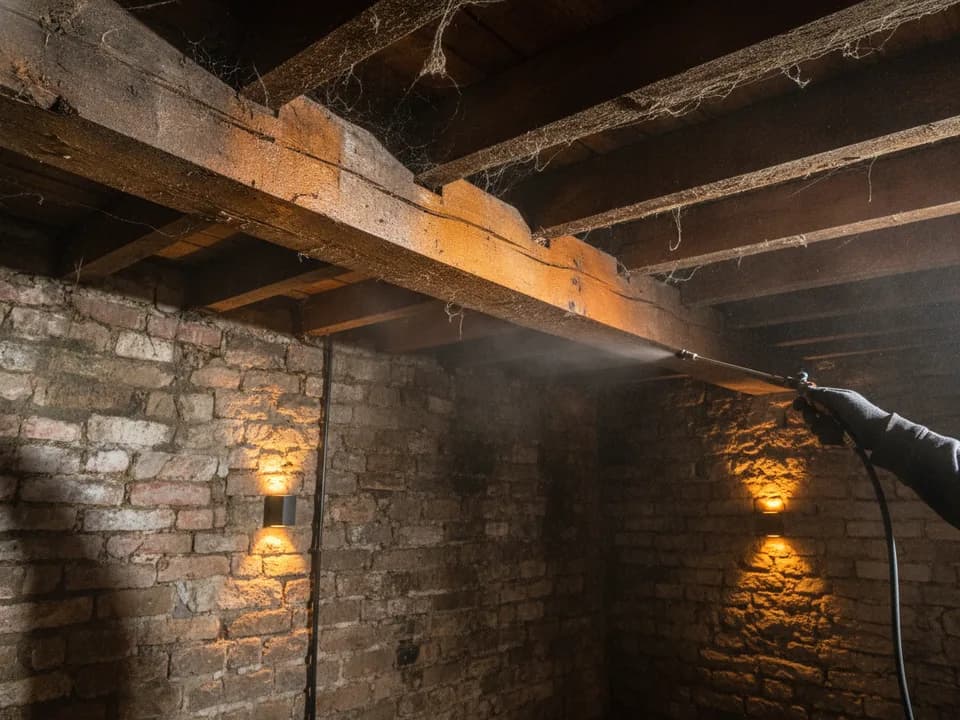
Signs to look for are a musty smell, soft or spongy joists when pressed, dark staining, or visible fungal growth on timber near the cellar ceiling or floor. Years of damp air sitting untreated in a Yorkshire cellar can lead to wet rot or, less often, dry rot in structural joists. We inspect the timber as part of every survey, and treat it with a preservative spray or replace sections where the damage is too far gone, always after the damp source itself has been dealt with.
A cellar that has sat damp for years often takes its toll on the timber above it, and treating the wood without fixing the damp first is a waste of money, the rot just comes back. RM Lee Cellar Conversions always deals with waterproofing before timber treatment, then sprays, treats, or where needed replaces affected joists and beams so the structure above your new room is sound for decades, not just presentable for a home report.
- Protects the structural integrity of the floor above your cellar
- Always sequenced after waterproofing, never before
- Written treatment documentation for insurers and buyers
- Often bundled into a full conversion at no extra site-visit cost
The process
How this job actually runs
01
Timber Inspection
Every joist, beam and length of skirting in the cellar zone is checked for rot, damp staining, and structural soundness.
02
Damp Source Resolved
Waterproofing is completed first, because treating timber that is still getting wet is pointless.
03
Treatment or Replacement
Sound timber is sprayed with preservative, badly affected sections are cut out and replaced like-for-like.
04
Sign-Off
Written confirmation of the work carried out, useful for mortgage and insurance purposes.
Related
Other services we cover
Questions
Timber Treatment FAQs
Sustained damp air sitting against structural joists and beams for years, often unnoticed because the cellar is rarely visited, allows wet rot and occasionally dry rot fungi to take hold. It is one of the quieter forms of damage a damp cellar causes, since it happens above your head rather than at eye level.
Generally yes. Dry rot can spread through masonry as well as timber and continue even after the timber it started on is removed, whereas wet rot stays localised to the wet timber itself and typically stops once the damp source is fixed. Either way, we resolve the underlying damp first before any treatment.
It depends on how far the rot has progressed. Sound timber with early-stage fungal activity can often be treated with a preservative spray, but timber that has lost structural integrity needs cutting out and replacing like-for-like, which we assess honestly during the inspection.
Because treating timber that is still getting wet is a waste of money, the rot simply returns. Every timber treatment job we do follows waterproofing, never the other way round.
Not usually, treatment is applied to existing joists and beams without adding significant bulk. Where full replacement of a beam is needed, we work to match the original profile so ceiling height is not affected.
If our inspection finds active rot or damp-affected timber, we will flag it regardless of whether you are pursuing a full conversion, because leaving it untreated risks the structural floor above the cellar over time.
A combination of visual inspection and, where relevant, a moisture meter reading confirms the timber is drying out and fungal activity has stopped. We do not consider a job finished until the underlying damp issue and the timber condition are both resolved.
We provide written documentation of the treatment carried out, useful for mortgage and insurance purposes, and we stand behind the work as part of the overall job.
It varies with the extent of damage found. Minor preservative treatment of otherwise sound timber adds relatively little, while replacing several joists is a bigger job, and we always confirm findings and cost at survey stage before proceeding.
In most cases yes, since the affected timber sits within the cellar zone itself. Where a joist also supports the ground floor above, we take extra care and explain exactly what is involved before starting.
Areas